





Secured by Design for historic buildings

It is important that security measures designed into historic building projects match the risk, avoiding the expense of repairing damage resulting from crime and retrofitting a security measure after an incident.
Secured by Design (SBD) is the official police security initiative, working to improve the security of buildings and their immediate surroundings to keep people and communities safe. SBD’s product-based accreditation scheme, the Police Preferred Specification, provides a recognised standard for all security products that can deter and reduce crime. Many hundreds of companies produce thousands of attack-resistant crime prevention products across 30 different crime categories, which have achieved Police Preferred Specification. The Secured by Design membership scheme recognises companies whose products have been awarded Police Preferred Specification status. To meet SBD’s high standards, all security products are required to meet or exceed the performance expectations documented within the relevant security standard for that type of product.
The Police Preferred Product List has categories such as windows, doors, locks and fogging devices. Some of the products of SBD members, including secondary glazing, doors, locks, fencing and hostile-vehicle mitigation products, have been accepted by heritage professionals for some conservation areas and world heritage sites and on listed buildings. SBD is working to place a heritage marker on products on the list, making it easier to identify a security product that complies with the requirements for use in a heritage location; it will also provide a link to the company’s web page and to case studies of the products in use.
With a heritage building, some matters may need to be considered that would not apply to a new build. The adaptation may need to be fully reversible; there may be questions of whether the surrounding structure is strong enough to hold the security product; the structure may fail before the security product does, resulting in it being difficult or impossible to repair to an acceptable standard; and the appearance of the product may have to take account of a historic setting. The Police Preferred Product List is intended as one of many tools to mitigate the risks of crime.
Where a desired security application or product is not suitable for a specific heritage project, compromises can be made. For example, the layering of security in other areas may be increased to reduce the risk and to delay a potential criminal, increasing their risk of being caught in the act.
A police designing out crime officer or other qualified security professional will be able to help, as may the conservation officer and Historic England. A conservation management plan can include security considerations.
This article originally appeared as ‘Security for historic buildings’ in the Institute of Historic Building Conservation’s (IHBC’s) Context 179, published in March 2024. It was written by Stephen Armson-Smith, a former police officer, designing out crime officer and heritage crime consultant, is working with Secured by Design.
--Institute of Historic Building Conservation
Related articles on Designing Buildings
- Conservation.
- Crime Prevention Design Advisor.
- Heritage.
- Historic environment.
- IHBC articles.
- Institute of Historic Building Conservation.
- Secure space.
- Secured by design.
- Securing Urban Heritage: agents, access, and securitization.
- Security and the built environment.
- Security rating scheme.
- Security.
IHBC NewsBlog
IHBC sponsors Gardens Trust event 23-4 Sept 2026
.jpeg)
'Learning from the Past, Shaping the Future’ takes place in Milton Keynes
Renovations to Frank Lloyd Wright's Fallingwater complete
.jpg)
World Heritage Preserved project opens house for tours again
Shakespeare Birthplace Trust places Hall's Croft on HAR Register
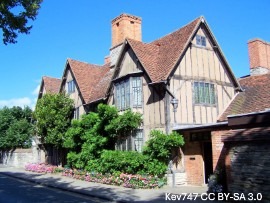
Stratford-upon-Avon home of Shakespeare's daughter is 'At Risk'
Lady Grange’s House repaired on St Kilda
.jpg)
National Trust for Scotland repairs stone cleit with link to famous island resident
Griff Rhys Jones on BBC Radio 4 Today programme
,_Green_Lane,_Derby.jpg)
The Victorian Society’s President unveiled its latest Top Ten Endangered Buildings 2026.
Need a MATE? Book your place now.

IHBC offers free webinars on applying for IHBC accreditation (Full & Associate).
UK Stained Glass Repository finds windows new homes
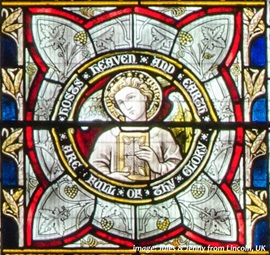
How are stained glass windows are rescued, stored and repurposed?
APPGEBE report sets high aims for quality
'Government must not sacrifice quality in drive to build 1.5m homes'
New measures protect Historic Shipwrecks from heritage crime

Underwater cultural heritage benefits from new HE guidance
How could the City of London skyline look in 6 years' time?

Visualisation shows approved planning applications as completed buildings
National Trust for Scotland calls for VAT cuts
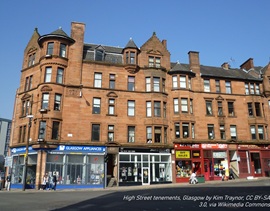
Heritage neglect is encouraged by current policies
IHBC's 'Context' Issue 186 features Industrial Heritage

IHBC's members' journal reports on the challenges of conserving infrastructure
Book now for IHBC Annual School 2026
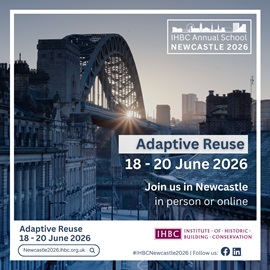
IHBC Annual School is taking place 18-20 June 2026 in Newcastle
RICHeS Research Infrastructure offers ‘Full Access Fund Call’
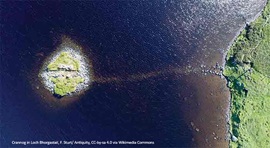
RICHeS offers a ‘Help’ webinar on 11 March
Latest IHBC Issue of Context features Roofing
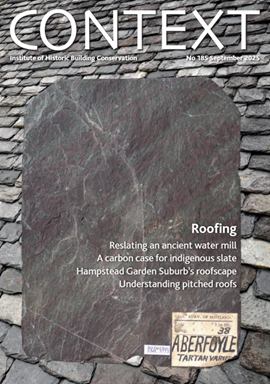
Articles range from slate to pitched roofs, and carbon impact to solar generation to roofscapes
Three reasons not to demolish Edinburgh’s Argyle House

Should 'Edinburgh's ugliest building' be saved?
IHBC’s 2025 Parliamentary Briefing...from Crafts in Crisis to Rubbish Retrofit
IHBC launches research-led ‘5 Commitments to Help Heritage Skills in Conservation’
How RDSAP 10.2 impacts EPC assessments in traditional buildings

Energy performance certificates (EPCs) tell us how energy efficient our buildings are, but the way these certificates are generated has changed.